

🔰 The Beginner’s Guide to Disc Golf: Rules, Gear, and First Steps
Welcome to the world of disc golf! This is your comprehensive resource for getting off the couch and onto the course. Disc golf is an affordable, accessible, and fun sport that blends the challenge of traditional golf with the joy of throwing a flying disc.
This guide will cover everything you need to know to play your first full round.
Part I: What is Disc Golf? (The Basics)
Disc golf, also known as frisbee golf, is played much like traditional ball golf. The object is to complete a course from beginning to end in the fewest number of throws possible.
The Core Objective
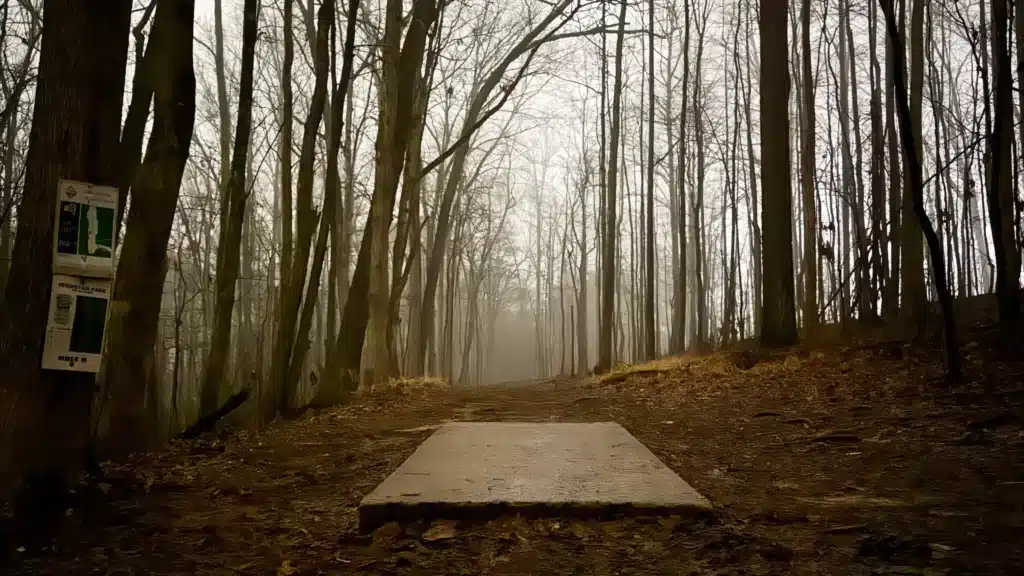
- Start at the designated Tee Pad (Teeing Area).
- Throw your disc toward the target, a specialized metal Basket (often called a Disc Pole Hole).
- Continue throwing from where your previous throw landed (the Lie).
- Finish the hole when your disc lands in the basket or chains.
- The total number of throws (strokes) is your score for the hole.
Safety First: Course Etiquette
- The most important rule is Safety and Courtesy.
- Never throw when people are in range. Ensure the fairway and landing area are clear.
- Yield to park users—give right of way to hikers and other visitors.
- Don’t litter. Pack out what you pack in.
- Stay out of the way. Don’t walk in front of a player who is throwing; stand behind them until the shot is complete.
Part II: The Essential Gear Checklist
You don’t need a lot of equipment to start, but having the right discs is crucial for learning good technique.
1) The Discs (Your Starter Set)
A beginner should start with just three discs—one of each main type. Look for lighter weights (160–170 grams) and discs labeled Understable (more on this in our Flight Ratings guide).
| Disc Type | Purpose | Key Characteristics for Beginners |
|---|---|---|
| Putter | Short, accurate shots & landing in the basket (10–30 ft). | Thick, blunt edge; slow speed; flies straight. |
| Mid-Range | Controlled, moderate-distance shots (up to ~200 ft). | Rounded rim; more distance than a putter; very controllable. |
| Fairway Driver | Max distance on your opening shot (Drive). | Sharper, thinner rim; lower speed rating (Speed 6–8) than distance drivers. |
2) Must-Have Accessories
| Accessory | Why You Need It |
|---|---|
| Mini Marker Disc | Marks your Lie before the next throw (required for PDGA-compliant play). |
| Disc Golf Bag | Carry 3–5 discs, water bottle, and accessories comfortably. |
| Towel | Keep hands and discs clean/dry for a consistent grip. |
| Sturdy Footwear | Traction and ankle support for uneven terrain. |
| Water Bottle | Rounds can run long—stay hydrated. |
Part III: Basic Rules of Play
While the official rulebook is dense, recreational play follows these essential principles:
Starting the Hole (The Tee Throw)
- Tee Off: The first throw on every hole must be made from within or behind the designated Tee Pad.
- Order of Play: Lowest score on the previous hole throws first on the next tee.
Continuing the Hole (The Lie)
- Mark Your Lie: Place a mini marker disc on the ground directly in front of your thrown disc, then pick up the thrown disc.
- Stance: At least one point of contact (foot) with the ground directly behind the mini.
- Follow-Through: You may run up and follow through on normal throws, but release before stepping past your lie.
The Putting Rule (Within 10 Meters)
If your Lie is within 10 meters (33 feet) of the basket, you are in the “Putting Area”. Crucial rule: You must maintain balance behind your lie after releasing the putt until the disc comes to rest. Stepping past early is a foot fault (penalty stroke in tournaments).
Out-of-Bounds (O.B.)
If your disc lands in an area marked as O.B. (e.g., a pond, pavement, or a designated area), take a one-stroke penalty and play from a drop zone or the point where the disc last crossed in-bounds.
Part IV: Your First Throwing Techniques
The backhand throw is the most common and easiest for beginners to learn.
The Backhand Grip
- Fan Grip (Recommended): Thumb on top; index slightly spread; remaining fingers gently fanned against the inside rim for control.
- Power Grip (For Distance): All four fingers tucked tightly under the rim for max power/spin—save this for later.
The Backhand Stance & Motion (Standstill)
- Stance: Throwing shoulder faces target; feet shoulder-width apart.
- Reachback: Bring disc straight back on a level plane; shift weight to back foot.
- Pull Through: Lead with the elbow; pull across the chest with a firm wrist.
- Snap: Generate speed with a quick wrist snap as the disc reaches your front chest.
- Follow-Through: Let your arm/body unwind naturally to dissipate momentum.
🔗 Next Steps & Deeper Dives
You now have the fundamental knowledge to play your first round! The best next step is to grab a starter set and find a local course.
- Mastering Disc Golf Flight Ratings and Stability: Learn what those four numbers on your disc mean (Speed, Glide, Turn, Fade).
- How to Throw a Disc Golf Disc (Backhand & Forehand): Dive into advanced form, run-ups, and the sidearm (forehand) throw.


